
Marketing Automation / CRM
Lifecycle email sequences and lead-scoring workflows connected to how your sales team actually follows up, so a lead's behavior automatically triggers the right next step.
Get a Free Marketing Automation / CRM QuoteWhat marketing automation / crm actually involves
Marketing automation and CRM work together to make sure a lead's behavior actually triggers the right response — an email sequence, a lead score change, a notification to sales — without someone manually tracking every contact's status by hand.
Most businesses already own a CRM and possibly a marketing automation tool, but the two often aren't properly connected, which is where most of the value gets lost. We focus as much on integration and workflow logic as on the tools themselves.
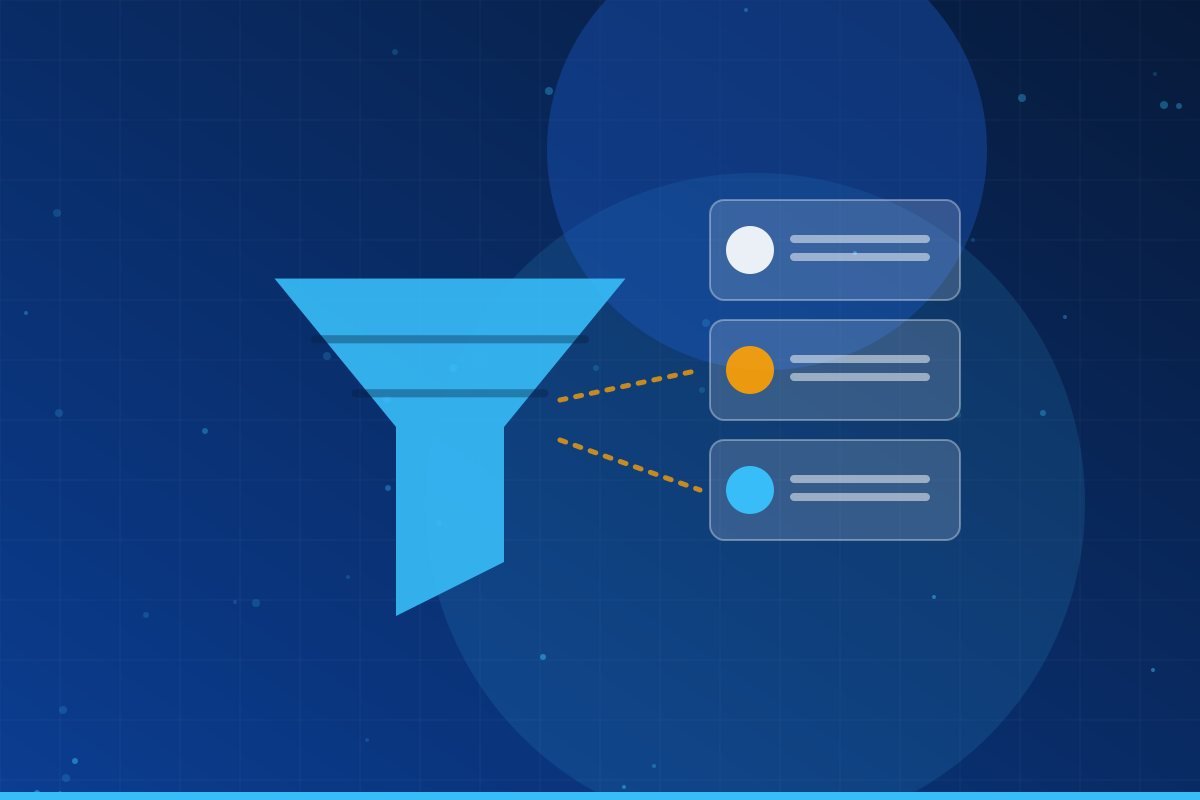
How we approach marketing automation / crm
Lead scoring & segmentation
Not every lead deserves the same follow-up. Lead scoring assigns weight to specific behaviors — pricing page visits, demo requests, email engagement — so sales attention goes to leads showing real buying intent first.
Segmentation goes beyond basic demographics to behavior and lifecycle stage, so a first-time visitor and a returning customer receive genuinely different messaging.
Automated email sequences
Welcome sequences, nurture campaigns, and post-purchase sequences all run automatically based on triggers, rather than requiring someone to remember to send the next email manually.
We build sequences around actual buyer psychology at each stage — early-stage content that educates, later-stage content that addresses objections — rather than a generic drip of promotional emails.
CRM & sales handoff workflows
The handoff from marketing to sales is where the most leads quietly get lost. We build automated workflows that notify the right salesperson the moment a lead crosses a defined intent threshold, with full context attached.
This also works in reverse — a deal marked won or lost should automatically stop or adjust the marketing sequences that contact is in, a step many businesses miss.
Reporting & attribution
Connecting marketing automation and CRM data properly means you can trace a closed deal back to the campaign or content that originated it — not just 'organic' or 'referral,' but the actual first touchpoint.
What working with us looks like
Step 1 of 4 — Audit
We review your current CRM and marketing automation setup, including where leads currently fall through the cracks.
Marketing Automation / CRM in practice
B2B distribution company
Challenge: Leads captured through the website weren't syncing reliably to the CRM sales reps used, causing inconsistent, delayed follow-up.
Approach: A direct integration between website lead-capture forms and the CRM, with automated lead scoring and instant sales notifications for high-intent behavior.
Result: Average first-response time to new leads dropped from days to hours, with sales reporting better context on new leads from the start.
Healthcare provider network
Challenge: Patient inquiry follow-up relied entirely on staff manually checking a shared inbox, with no nurture for inquiries that didn't convert immediately.
Approach: An automated nurture sequence for inquiries not booked within 48 hours, paired with a simplified CRM view giving front-desk staff a prioritized follow-up list.
Result: A meaningful share of previously lost inquiries were recovered through the automated nurture sequence alone.
Common questions about marketing automation / crm
- Do we need to replace our current CRM?
- Usually not — we build automation and integrations around the CRM you already use rather than requiring a platform switch.
- How is this different from our CRM's built-in automation?
- Most CRMs have basic automation, but marketing-specific workflows are usually better handled by a dedicated marketing automation tool connected to the CRM.
- How long does it take to set up?
- A first workflow typically takes two to four weeks depending on integration complexity with your existing systems.
- Will this replace our sales team's judgment?
- No — automation handles the consistent, repetitive parts of follow-up. The actual sales conversation stays entirely with your team.
Services that pair well with marketing automation / crm
Analytics & Reporting
Monthly reporting built around the metrics that tie back to revenue — cost per lead, conversion rate, pipeline influenced — not vanity numbers like impressions alone.
ExploreSEO
Technical fixes, on-page optimization, and local search work aimed at compounding organic traffic over months, not a short-lived spike. We prioritize the pages and keywords most likely to bring in ready-to-buy visitors.
ExplorePaid Media (PPC)
Search and social ad campaigns managed toward a target cost-per-lead, with ongoing bid and creative optimization — not a 'set it and forget it' campaign that quietly wastes budget.
Explore
Ready to see what this looks like for your business?
Book a free 30-minute consultation — no pitch deck, just a conversation about where automation would actually help.
Book a Free Consultation